
Opened a sale app this week and felt like the discounts went on a diet? You are not imagining it. The festive smartphone squeeze India is facing in 2026 is simple to describe: sticker prices are higher than last Diwali, the price cuts are thinner, and a lot of people are quietly deciding their current phone can survive one more year. So the real question is not “which deal is hot” but “should I even be in this queue?” Let us sort that out, CyberIntro style.
Table of Contents
Two Numbers That Explain the Whole Mood
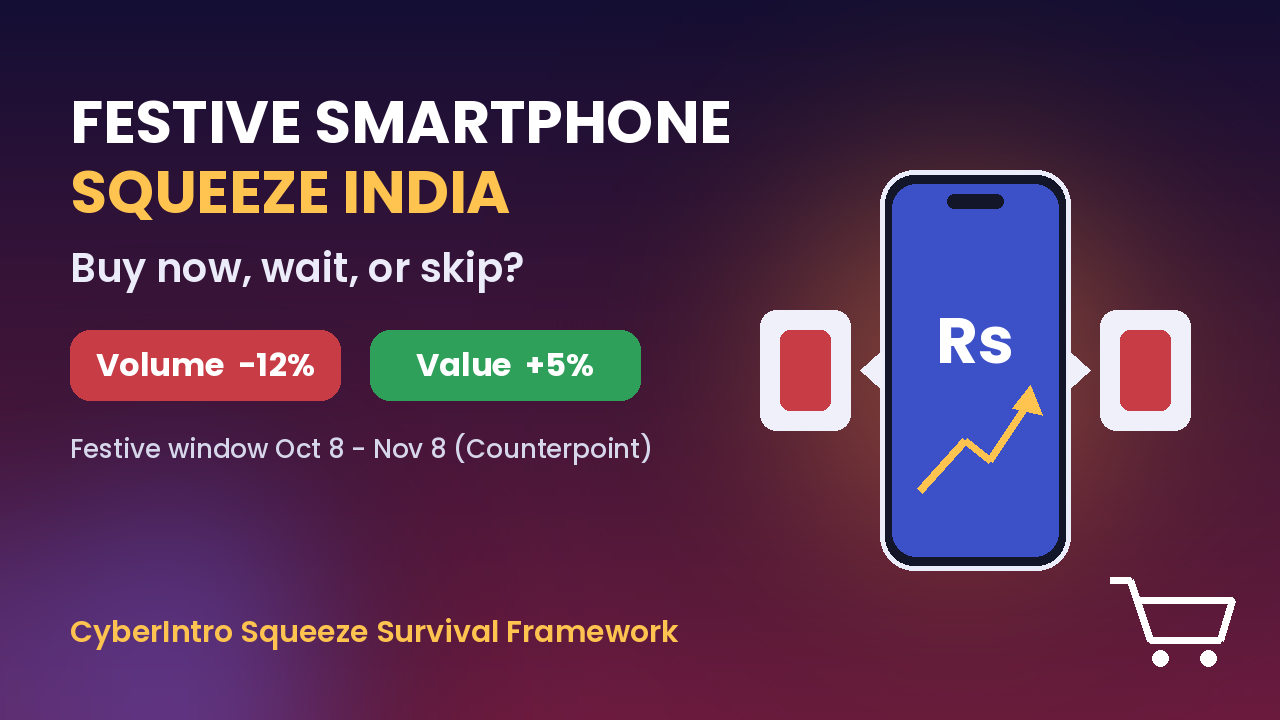
Counterpoint Research expects India’s smartphone sales between October 8 and November 8 to fall about 12% by volume compared with last year. In the same window, it expects the total money spent on smartphones to grow about 5%.
Wait, fewer phones sold but more money spent? Both can be true at once. When the average phone costs more, a smaller crowd can still ring up a bigger bill. Think of it like a mithai shop that raised prices: fewer boxes leave the counter, but each box costs more, so the cash drawer still looks fine.
The early sale data points the same way. Datum Intelligence estimates online festive sales in the first four days (October 7 to 10) at roughly Rs 29,800 to 30,900 crore, versus about Rs 33,200 crore in the same stretch last year. It also projects smartphones to make up around 30% of festive online sales this year, down from about 35% in 2025, with mobile sales growth slowing to roughly 6% from 26%. Translation: people are still shopping, just not on phones.
Why Memory Chips Spoiled the Diwali Discount Party
Every phone needs RAM (DRAM) and storage (NAND). Both have become far costlier over the past year, and that cost lands straight on the price tag.
- Prices already moved up: Counterpoint data reported by Digit shows Indian smartphone prices rose about 16% on average in the first half of 2026.
- Budget phones got hit hardest: phones under Rs 10,000 saw average hikes of around 32%, and shipments in that band fell about 65% year-on-year in the first half of 2026, per Counterpoint via Digit. The Rs 10,000 to 15,000 band also saw shipments drop about 20%. Memory now eats a much bigger slice of what a cheap phone costs to build, so brands have less room to absorb the hit.
- The rupee did not help: a weaker rupee makes imported parts costlier for phones assembled here.
- No quick relief: industry voices quoted by Digit do not expect memory prices to ease before 2028.
With their own costs rising, brands cannot slash festive prices like before, so this season leans on bank offers, exchange bonuses, buybacks and EMI instead. The discount did not disappear; it changed costume.
Who Feels the Squeeze, and Who Is Still Upgrading
Squeezed hardest: budget and first-time buyers
That shipment crash is why the budget aisle feels empty of real bargains. Brands are also trimming their cheapest line-ups. Buying a first phone, or one for a parent on a tight budget? This is the toughest year in a while for a genuine deal.
Still upgrading: premium users with a plan
At the other end, trade-in platform Servify says festive months are shaping up as an upgrade season more than a first-purchase season. Its founder says phones in the Rs 60,000 to 1 lakh range are largely bought with financing plus trade-ins, while the above Rs 1 lakh and foldable crowd is mostly existing premium users who upgrade every 12 to 24 months.
Counterpoint’s Tarun Pathak puts the logic neatly: many people will hold off on upgrades they do not need, but if you were already going to buy, this festive window may still be a reasonable time, since further memory-driven hikes could follow. That one idea is the backbone of our framework below.
The CyberIntro Squeeze Survival Framework
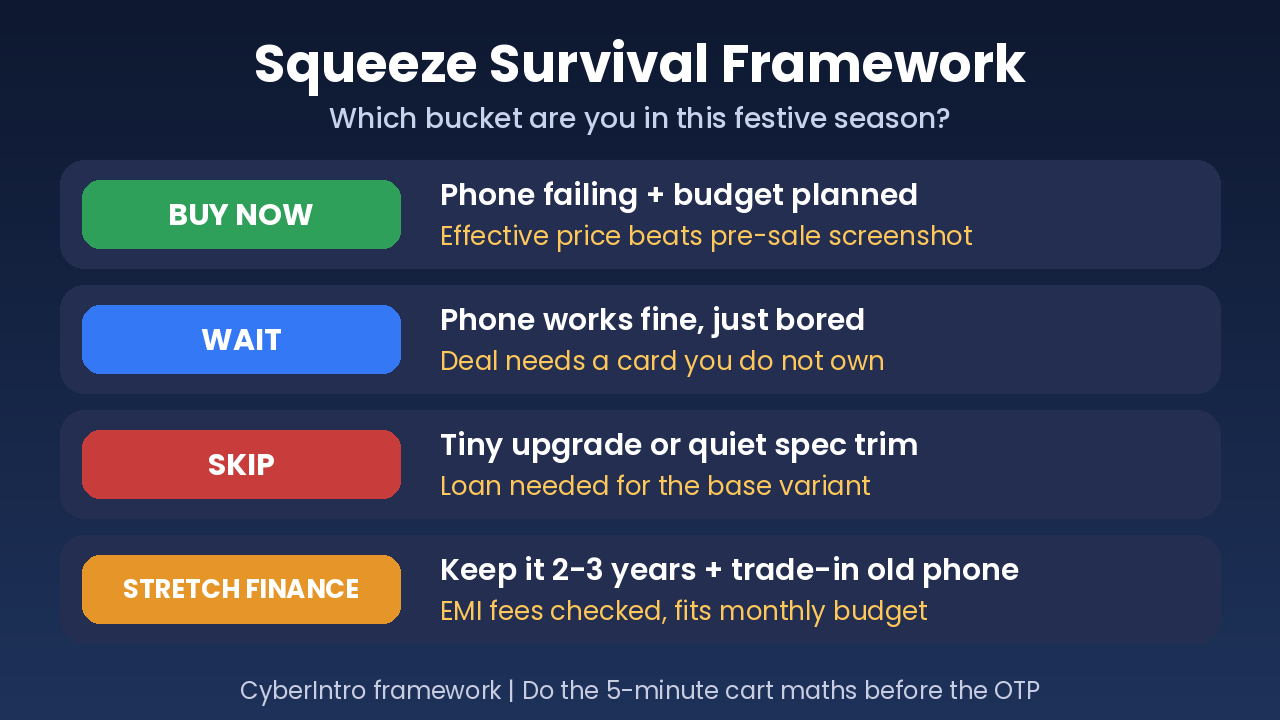
Forget “is this the lowest price ever”. Ask which bucket you fall into.
Bucket 1: BUY NOW
Go ahead this festive season if most of these are true:
- Your current phone is genuinely failing: dead battery by lunch, cracked screen, no more security updates, or storage permanently full.
- You already had a model and a budget in mind before the sale started.
- You can pay in full, or with an EMI that fits comfortably inside your monthly budget.
- The effective price after offers beats the price you tracked before the sale (screenshot it, do not trust memory).
Why now: if you need a phone anyway, waiting for memory prices to cool could mean paying more later.
Bucket 2: WAIT
Hold your horses if:
- Your phone works fine and you are mostly bored with it.
- The “deal” is only a bank offer on a card you do not own.
- The model you want launched recently and has not seen a single real price cut.
- You feel FOMO more than need. That is the sale banner talking, not you.
Waiting does not guarantee a lower price this year, but a phone that still works is the cheapest phone you will ever own.
Bucket 3: SKIP
Walk away from the cart if:
- The new phone is a small step up (same chip class, similar camera) from what you have.
- You would need a loan just to afford the base variant.
- The listing has lower storage or RAM than last year’s version at a similar price. In a memory crunch, watch for quiet spec trims.
- The offer depends on a seller or link you cannot verify. Run our festive sale scam safety setup before you tap anything.
Bucket 4: STRETCH FINANCE
The “better phone, paid off slowly” route, where most premium sales are happening. Fine, with rules:
- The EMI is no more than a small slice of your monthly take-home, and you are not stacking it on top of other EMIs.
- You plan to keep the phone at least two to three years, long enough to justify the stretch.
- Your old phone goes in as a trade-in, so the loan amount actually shrinks.
- You have read the fine print on fees. Our no cost EMI hidden charges guide shows exactly where the extra rupees hide.
The 5-Minute Cart Maths Before You Enter the OTP
Discounts this year are a combo meal, not one price cut. Before paying, write down one number: what this phone really costs you.
- Start with the selling price shown on the product page, not the struck-out MRP.
- Subtract the bank offer only if your card actually qualifies, and check whether it applies to EMI or only full payment.
- Subtract the exchange value you will really get, which depends on the condition check at pickup. Our exchange vs sell vs keep guide helps you decide if selling privately beats it.
- Add every EMI extra: processing fee, GST on interest, and any cashback you lose by choosing EMI.
- Add the add-ons you will actually buy: charger if it is not in the box, case, screen guard, protection plan.
If the final number still looks good against your pre-sale screenshot, buy with a clear conscience. If it does not, the bucket you belong in is probably WAIT. Buying an iPhone this season? Our iPhone festive sale buying guide runs this same logic model by model.
Final Thought
The festive smartphone squeeze is not a reason to panic and not a reason to splurge. Memory has made phones pricier, and brands are betting you will stretch with EMI and trade-ins. Some of you should. Many should not. Pick your bucket, do the cart maths, and remember: the best festive deal is the phone you actually needed, at a price you can sleep on. Happy shopping, and boss, keep that OTP to yourself.