
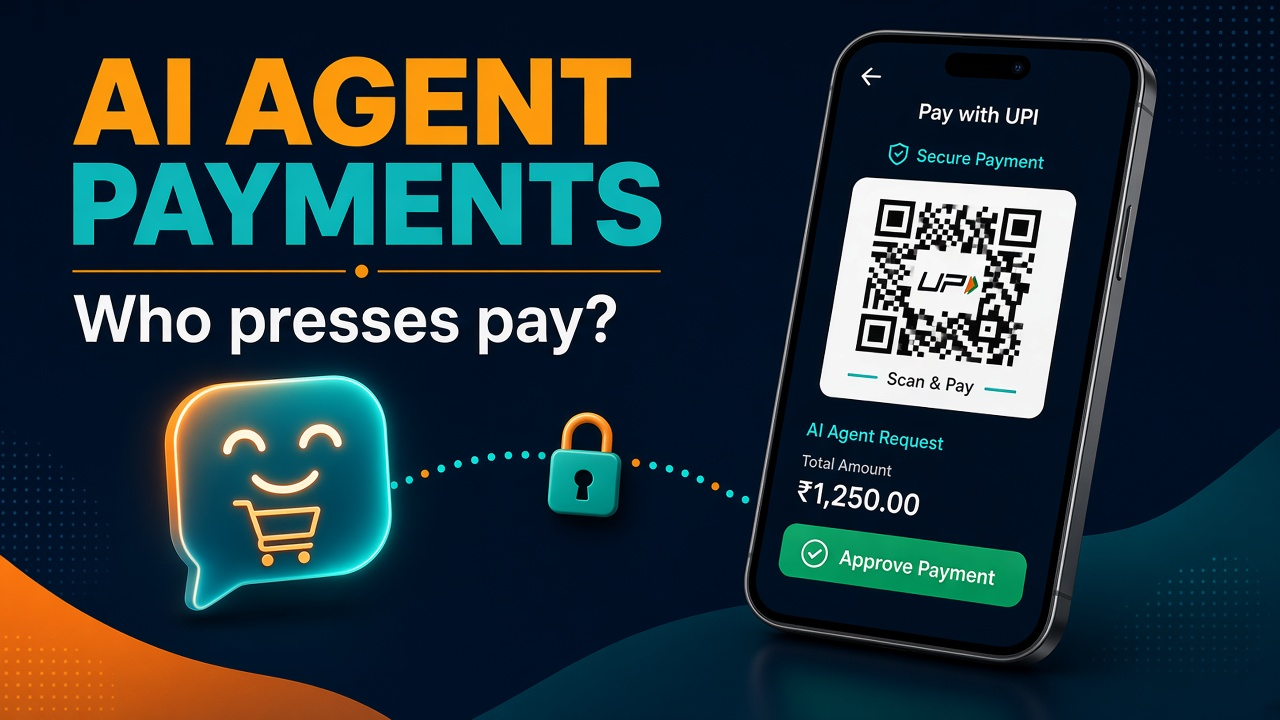
AI agent payments India stopped being a conference-panel buzzword on 6 November. That is the day Cashfree switched on Checkout for Agents, which lets an AI assistant in your browser walk through a payment page for you. Add the ChatGPT-plus-UPI pilot that has been running quietly with a handful of merchants, and suddenly your chatbot wants to do the grocery run too. So the real question for you is simple: should you let a bot anywhere near your money yet? Our short answer is “haan, but on a leash”. Here is the long one.
Table of Contents
What actually launched this week
Strip away the press-release language and this is what Cashfree has shipped:
- What it is: Cashfree’s existing hosted checkout now publishes a small menu of actions that a browser AI agent can call, using a new web standard called WebMCP
- What the agent can do: read the order summary and merchant name, list payment methods, open one, show the UPI QR code and check whether the payment went through
- What it cannot do: change the order, enter card numbers, CVV or OTPs, or approve the payment. Cashfree says no tool moves money on its own
- Where it works: redirect-style hosted checkout, payment links and payment forms. Popup, inline, One Click and subscription checkouts are not supported yet
- What you need: a Chromium browser that supports WebMCP, such as Chrome 149 or later
- How big it is today: Cashfree’s co-founder told ET that agents make up less than 1% of checkout sessions across its merchants
The pitch to merchants is that an agent no longer has to squint at a page designed for humans, guessing which box holds the amount. Cashfree claims this cuts the AI processing cost of a checkout by more than 40%, though it has not shared how it tested that number.
Who actually presses pay?
This is the bit most people miss, and it is the bit that matters. In every live Indian setup we could find, the bot does the boring legwork and you still do the final tap.
On Cashfree, the agent can bring up the QR code, but you scan it with your own UPI app and type your own PIN. If the page asks you to accept a convenience fee, pick a payment route or set up autopay, the agent has to hand control back to you. On the ChatGPT pilot built with NPCI and Razorpay, payments run through UPI Reserve Pay, which blocks a fixed amount for a chosen merchant, and UPI Circle, which lets you delegate payments within limits you set. Razorpay says ChatGPT itself never receives your payment credentials.
That lines up with what NPCI chairman Ajay Kumar Choudhary said at Global Fintech Fest in September: AI may recommend, but authentication and settlement must follow fixed, auditable rules. Translation: the bot can fill the cart, but the PIN stays in your pocket.
What is still not allowed (or not ready)
Before you imagine an assistant that quietly pays your bills while you sleep, here is where things stand:
- NPCI’s Unified Agentic Protocol is on hold. The standard meant to register and verify AI agents on UPI was due at Global Fintech Fest 2026, but NPCI paused it while it works on safeguards and waits for RBI clearance
- An agent registry is planned, not live. Reuters reported in September that NPCI is building one to vet agents before they can transact
- The ChatGPT UPI flow is still a pilot. Merchants like BigBasket were part of the early group, and OpenAI has not announced a wide public rollout
- Banks just got stricter, not looser. An RBI advisory dated 3 November tells banks running API-based fund transfers to tighten transaction limits, whitelist beneficiaries and add extra confirmation on API debits, partly because of worries about AI-assisted attacks
So no, fully hands-free shopping is not here. What is here is a helper that can do 80% of the clicking, while the system deliberately keeps the last 20% with you. Honestly, that is the right way round.
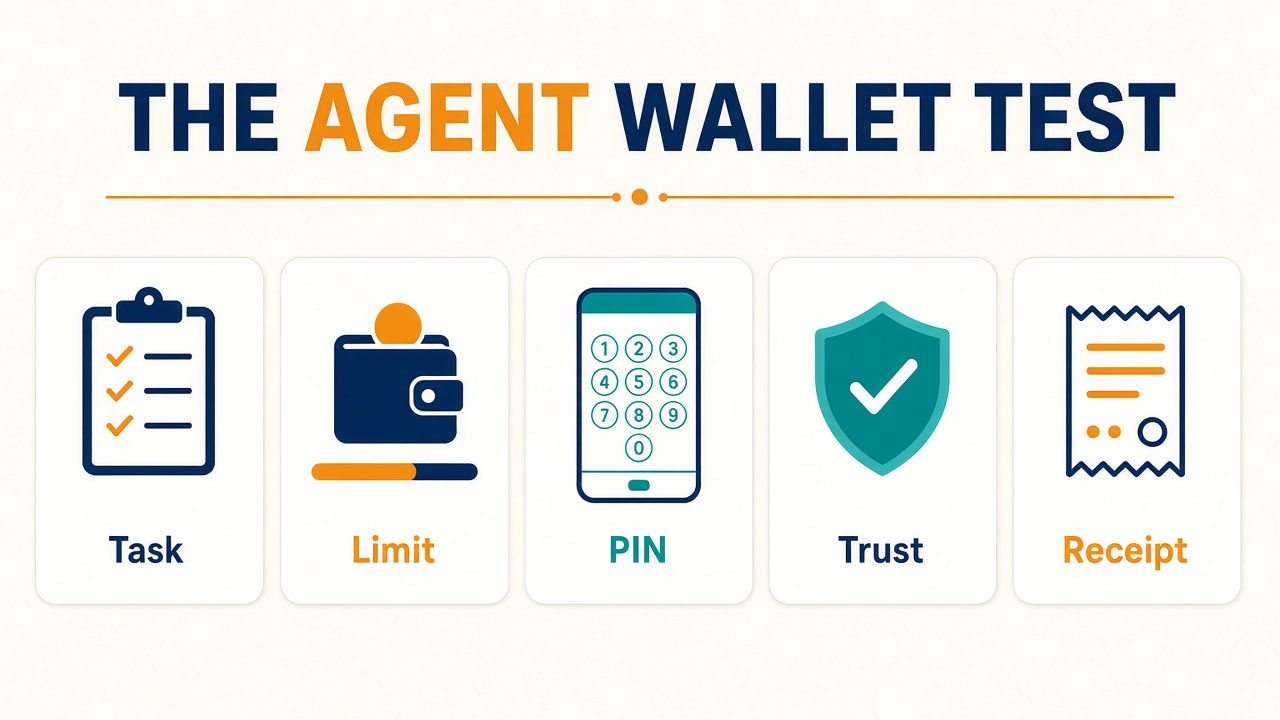
The CyberIntro Agent Wallet Test
Whenever an app, browser or chatbot offers to “complete the purchase for you”, run it through these five checks. If it fails even one, do the checkout yourself.
1. Task: is the job boring and repeatable?
Reordering atta, booking the same Monday cab, topping up a known recharge. Good agent work. A Rs 80,000 phone during a flash sale with five bank offers? Do that yourself. Agents are bad at judging whether an offer is really an offer, as anyone who has read the fine print on no-cost EMI already knows.
2. Limit: is there a hard ceiling?
Only use flows where a cap is set by your bank or UPI app, not by the bot. Reserve Pay blocks a fixed amount for one merchant. Delegated UPI Circle payments have limits you choose. If the only limit is “the AI promised to be careful”, that is not a limit, boss.
3. PIN: do you still authenticate?
The final approval should happen in your UPI app, with your PIN or your bank’s own check. Any tool that asks you to paste a card number, CVV or OTP into a chat window fails instantly. Genuine setups are built so the bot never sees those.
4. Trust: do you know who built the agent?
A big-name assistant or your browser’s built-in helper is one thing. A random extension promising “auto deals” is another. Fake shopping assistants are an obvious next step for scammers, and we have already seen how convincing fake security alerts can look. Install agents only from official stores and developers you can name.
5. Receipt: can you check what it did?
You should get a normal UPI or bank notification and a merchant order confirmation for every purchase. If the agent cannot show you a clear record of what it bought and for how much, switch it off. Also check your bank app once a week for any mandate or block you do not remember setting.
Who should try it now, and who should wait
- Try it: heavy online shoppers who repeat the same small orders, already use UPI limits sensibly and check their transaction history
- Try it carefully: people curious about the tech. Start with one low-value order on a merchant you already use
- Wait: parents setting up phones for elderly family members, anyone who shares a phone, and anyone who rarely looks at bank SMS. Turn the feature off for them for now
Also, do not expect savings. Agents make checkout faster, not cheaper. The deal-hunting still has to be yours.
Final Thought
India is doing AI agent payments in a very desi way: let the bot run around the market, but keep the purse strings tied to your PIN. That is a good thing. Use agents for repeat, small, boring buys, keep hard limits in your UPI app, and never type sensitive details into a chat. When NPCI’s agent protocol and registry finally land, we will rerun this test and tell you if the leash can get a little longer.